How To Paint Miniatures With a Limited Palette
Master color harmony and mixing without the expensive shopping list
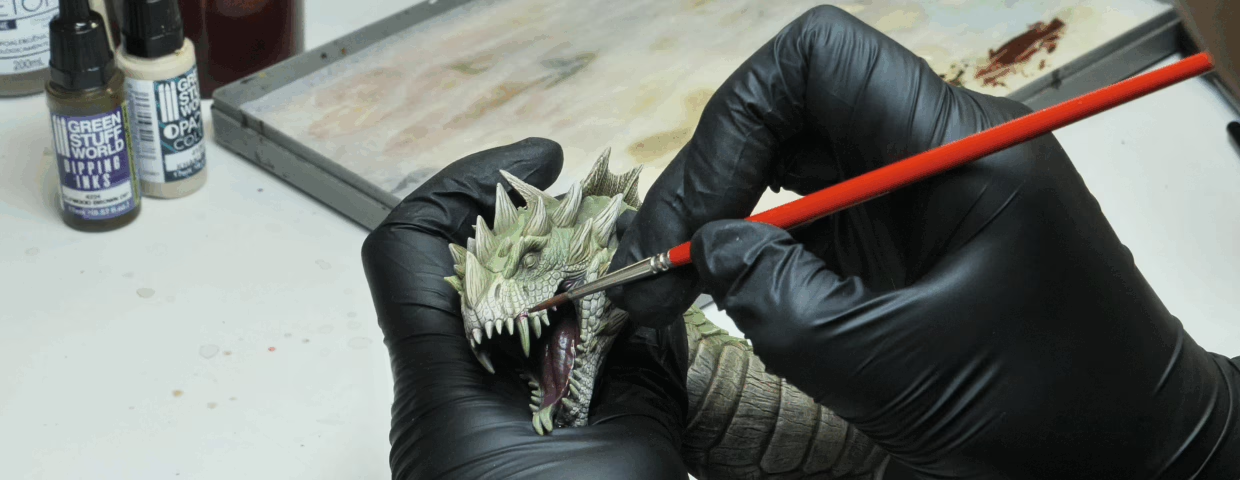
I’m staring at my desk, looking at a high-detail paladin from one of our recent bundles. He’s got everything: intricate plate armor, fur-lined robes, leather straps, and a face that actually looks like it’s seen a few too many dungeons. Then I look at my screen. A pro-painter is walking through a “simple” tutorial, casually mentioning fourteen different shades of “Grimy Underdark Moss” and “High-Elf Sunset.”
I look back at my desk. My wet palette is a mess of half-dried grey, and I definitely don’t have those specific moss colors.
You see a miniature painting tutorial, look at your modest pile of bottles, and just… sigh. But here’s a secrete that I’ve learned: limited palette miniature painting isn’t a handicap. It’s a shortcut. It’s how you make a complex hero look like a cohesive character instead of a collection of clashing factory colors.
The Problem With Too Many Paints
We tend to think that more bottles equal more skill. It’s a trap. When you have fifty shades of brown, you spend more time hunting for “the perfect one” than actually putting pigment to plastic. I’ve spent twenty minutes digging through a drawer for a specific mid-tone tan while my wet palette slowly turned into a desert.
In a world of infinite choices, you make fewer decisions. When you’re working on highly detailed miniatures, the complexity of the sculpt already demands your attention. You shouldn’t be fighting your paint rack too. A limited palette—usually sticking to three to five core colors plus black and white—forces you to understand how colors actually “talk” to each other.
Why Limited Palettes Work (The “Color DNA” Secret)
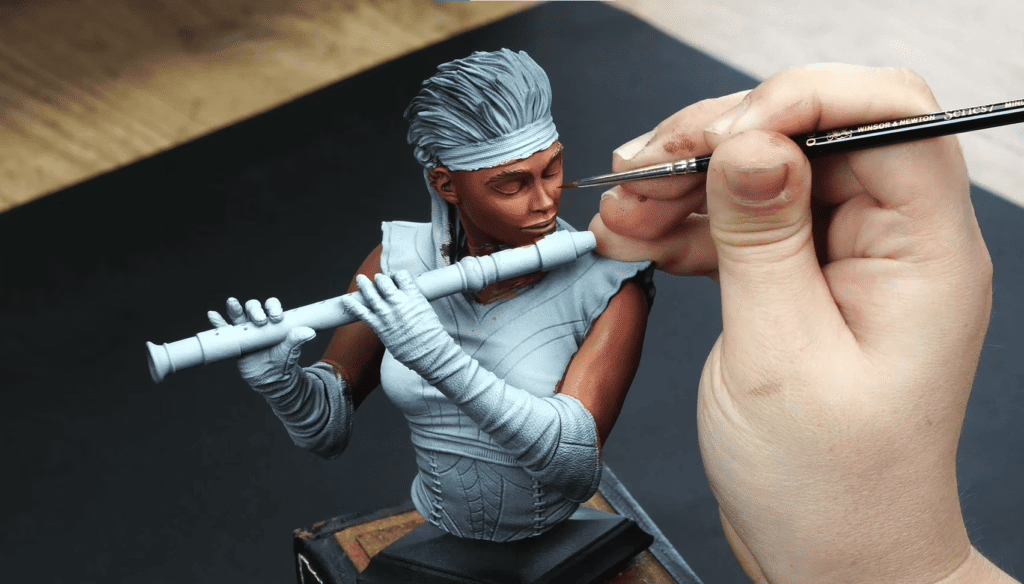
The reason painting miniatures with few colors works so well comes down to something called color harmony. Have you ever finished a model where the skin looks great and the armor looks great, but together they just look… off? Like the character was assembled from two different magazines?
That happens because those factory paints don’t share any “DNA.” When you use a limited palette, your green cloak is mixed from the same blue and yellow you used for the leather straps. Your skin tones share a base with the red on the shield. Because they all share the same base pigments, the whole miniature feels unified. It looks natural. It looks like the character is standing in actual sunlight, not under a disco ball of clashing tones.
This is a core pillar of miniature painting techniques: shared pigments create a believable reality.
Three Classic Limited Palettes for Your Table
You don’t need a degree in art school to make this work. You just need a few reliable “recipes” that have worked for painters since the Renaissance.
1. The Primary Heavy-Lifter
This is the “no-excuses” kit: Red, Yellow, Blue, Black, and White. With just these five, you can mix almost anything. Need a gritty orange for a rusted axe? Red and yellow. Want a deep, royal purple for a wizard’s robe? Red and blue. The trick I always tell people: mix a tiny bit more than you think you need on your wet palette. Getting back to that exact shade of purple three hours later is a task for the gods.
2. The Gritty “Zorn” Palette
It consists of Yellow Ochre, Cadmium Red (or a bright red), Black, and White. Notice there’s no blue? Here’s the magic: because the black is a “cool” tone, when you mix it with white, it creates a blue-grey that acts as a blue. This palette is the “cheat code” for realistic skin tones and weathered fantasy armor. It makes your models look like they’ve actually been marching through the rain and mud.
3. The Triadic Balance
Pick three colors that form a triangle on the color wheel—like Orange, Green, and Violet. Because they are evenly spaced, they create a natural balance that’s punchy and vibrant. It’s perfect for a hero character that needs to pop on the tabletop from five feet away.
Why Detailed Fantasy Miniatures Help You Learn Faster
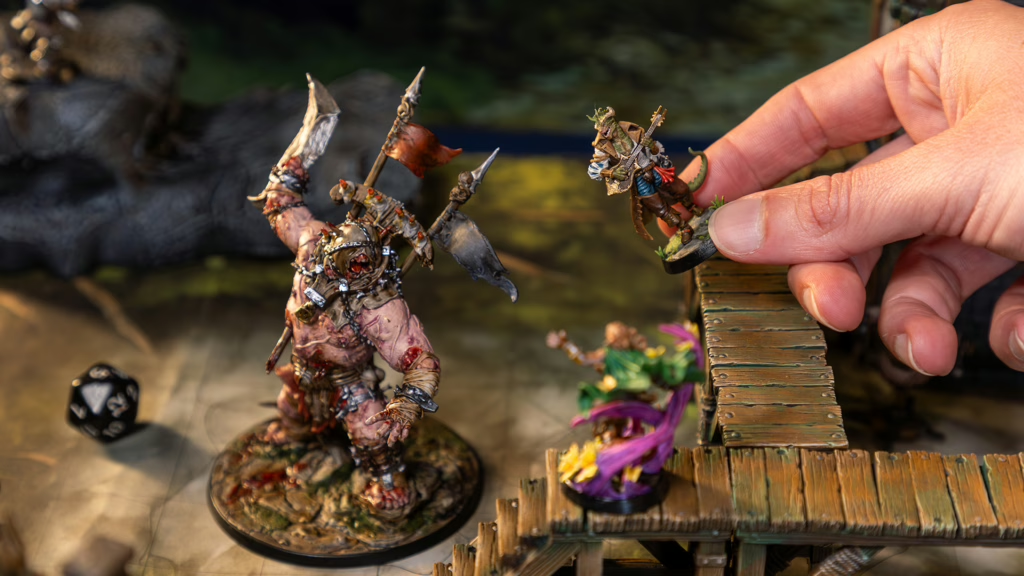
It sounds counterintuitive, but Loot Studios miniatures are actually better for learning limited palettes than simpler models. Why? Because our sculpts are designed with “texture variety.”
When you’re painting a Loot hero, you’re dealing with layered armor, cloth textures, and organic surfaces all on one model. These complex surfaces provide a playground for miniature painting color mixing.
- Layered Armor: You can see how your mixed metallic or “NMM” tones catch the light across different planes.
- Cloth Folds: These allow you to practice transition mixing from your base tone to a shadow mixed with a complementary color.
- Organic Skin: High-detail faces let you see exactly how a drop of red or yellow changes the “life” in a character’s expression.
Detailed models make color harmony easier to see. On a flat, featureless surface, a bad mix just looks like a smudge. On a high-detail sculpt, the textures help “sell” the color you’ve mixed. Wanna check our heroes and enemies before making any decision? Check our free mini pack!
A Practical Workflow for Your Next Hero
When you’re actually sitting there with your brush, the approach changes when you aren’t grabbing a new bottle every five minutes. Here is how you can handle a Loot Studios miniature with a limited palette:
- The Base Mix: Pick your main color—let’s say, a deep teal for a sea-knight. Mix your blue, a touch of yellow, and a tiny bit of black. Get it onto the wet palette.
- The Shadow: Instead of just adding black (which can make colors look “dead” or muddy), add a tiny bit of the color’s opposite. For teal/blue, add a bit of orange or red. It creates a deep, rich shadow that feels like it has volume.
- The Highlight: Add white or yellow to your base mix. Yellow makes the highlight feel “warm” (like sunlight); white makes it look “cool” or clinical.
- Test on Your Thumb: Before you touch the mini, swipe the brush across your thumbnail. What looks like a perfect “Leather Brown” on the palette often looks like “Wet Dirt” when it’s actually applied.
Creative Freedom With Limited Palettes
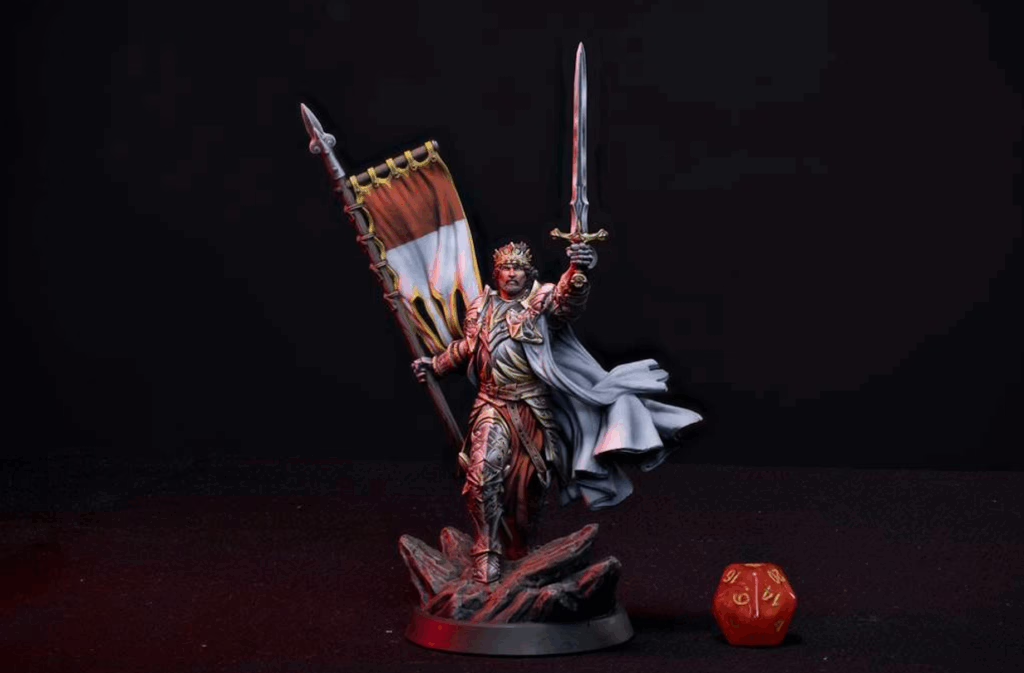
Sometimes, the best way to break a creative block is to lean into the limitation. I love doing monochrome challenges—just Black, White, and one “power” color like Purple or Teal.
Imagine a group of miniatures—maybe a pack of skeletons—painted entirely in greyscale, but with glowing blue eyes and blue sword-tips. It looks chic, it’s incredibly fast to paint, and it stands out on the table way more than a “standard” paint job.
Tips for Limited Palette Painting
- Wet Palette is Mandatory: You are doing a lot of mixing. If you use a dry plastic palette, your custom-mixed “perfect skin tone” will dry out in ten minutes.
- Record Your Mixes: If you find a “recipe” for leather that you love (like Red + Green + Yellow Ochre), write it down. You will forget. I have a notebook full of “Loot Leather #4” recipes that I’d be lost without.
- Shared Pigments: Use a tiny bit of your “main” color in every other mix on the model. It ties the whole piece together.
- Clean Your Water: Since you’re mixing pigments, your rinse water turns into “swamp juice” fast. Dirty water will kill a limited palette mix instantly.
Closing the Lid
At the end of the day, your desk should be a mess of half-mixed tones and a few dirty water jars. That’s the sign of a good session. You don’t need a warehouse full of paint to be an artist; you just need to understand the ones you have. A limited palette isn’t a cage—it’s a toolkit. It simplifies your decisions so you can spend less time shopping and more time actually getting paint on the plastic.
Next time you’re looking through Loot Studios painting tutorials or prepping a new monthly release, don’t worry if you’re missing that “Specific Emerald Green #42.” Just look at your blue and yellow, smile, and start mixing. You’ll probably find that the color you create is better than the one you were going to buy.
So, grab a monster or a hero with some layered armor and cloth, pick four bottles, and see what happens. You’ve got this.
Loot Studios can help you tell your story through highly detailed miniatures. Choose your favorite bundle from our previous releases or sign up for Fantasy or Sci-Fi to receive at least one new bundle every month. You can also check out some tips on our YouTube Channel.

Robert, also known as Rob, is an artist, English teacher, and lifelong RPG enthusiast. When he’s not sketching worlds or guiding learners through language, he’s diving into dice-rolling adventures and uncovering the magic that makes tabletop storytelling unforgettable. Fuelled by imagination and curiosity, Rob has spent years immersed in the RPG community, studying its stories, creatures, and creativity. He currently works in the marketing department at Loot Studios, where his passion for fantasy, minis, and the RPG universe fuels everything he does. Always with one foot in the real world and one in the realms of adventure, Rob celebrates art, language, and the joy of bringing ideas to life, whether at the table, in class, or behind the scenes.