Races in RPG Games
A Comprehensive Overview for New Players and DMs
The first step of creating your RPG character is choosing its species. And a lot of people get stuck right in the beginning. With so many options available in Dungeons & Dragons and Pathfinder, understanding the most iconic races in D&D and the most fierce Pathfinder ancestries is essential for both new players and seasoned Dungeon Masters. So I thought of bringing an overview of classic species in D&D and Pathfinder for new players!
So, what are the Classic Races in D&D?
At its core, a race or species (in the D&D 2024 rules) defines your character’s place in the world. Whether in D&D or Pathfinder, you’ll have abilities given by the ancestry of your choice, like score bonuses, special senses like Darkvision, or intrinsic magic. However, it’s far more than a collection of mechanical bonuses. Your choice influences how NPCs perceive you, your character’s culture, and the stories they tell. Let’s break them down:
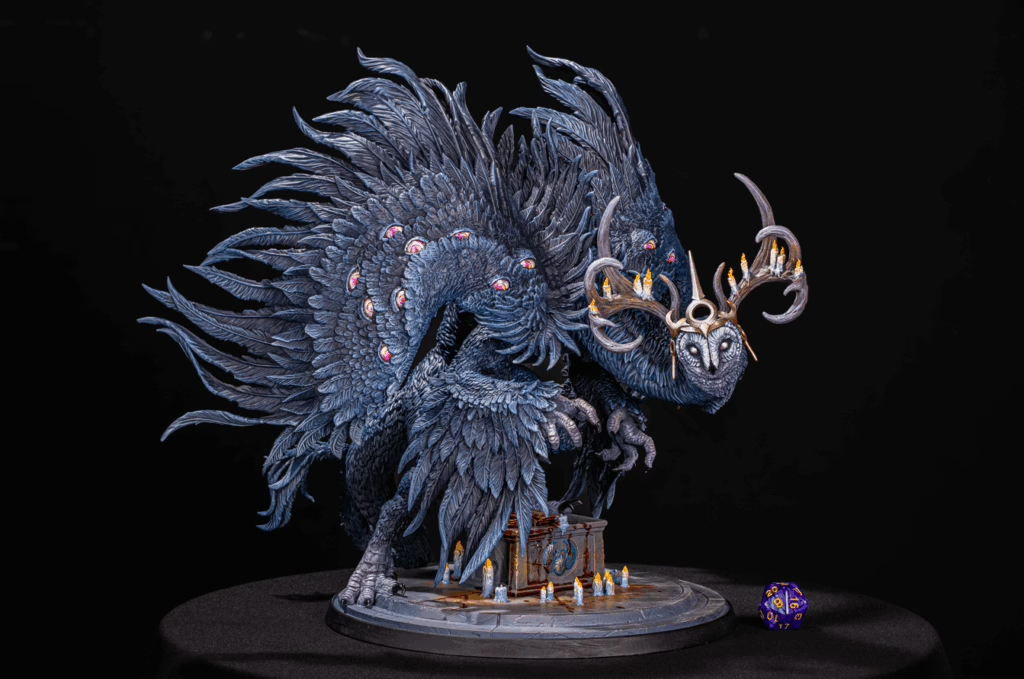
Humans: The Versatile Foundation
D&D 5e & 2024:
Humans are known for their adaptability. In the new D&D 2024 rules, humans are arguably stronger than ever, offering a choice of an Origin Feat and a skill proficiency.
Pathfinder 2e:
Here, humans are equally versatile. Their ancestry feats allow them to gain additional general feats or skill training, making them incredibly adaptable to any class.
Combat Strengths & Weaknesses:
- Strengths: A bonus feat (in D&D) or general feat (in Pathfinder) allows for build customization from level 1. They have no weaknesses, making them the safest choice for new players trying to understand the game.
- Weaknesses: They lack the specialized combat edges of other races, such as resistances or innate flight.
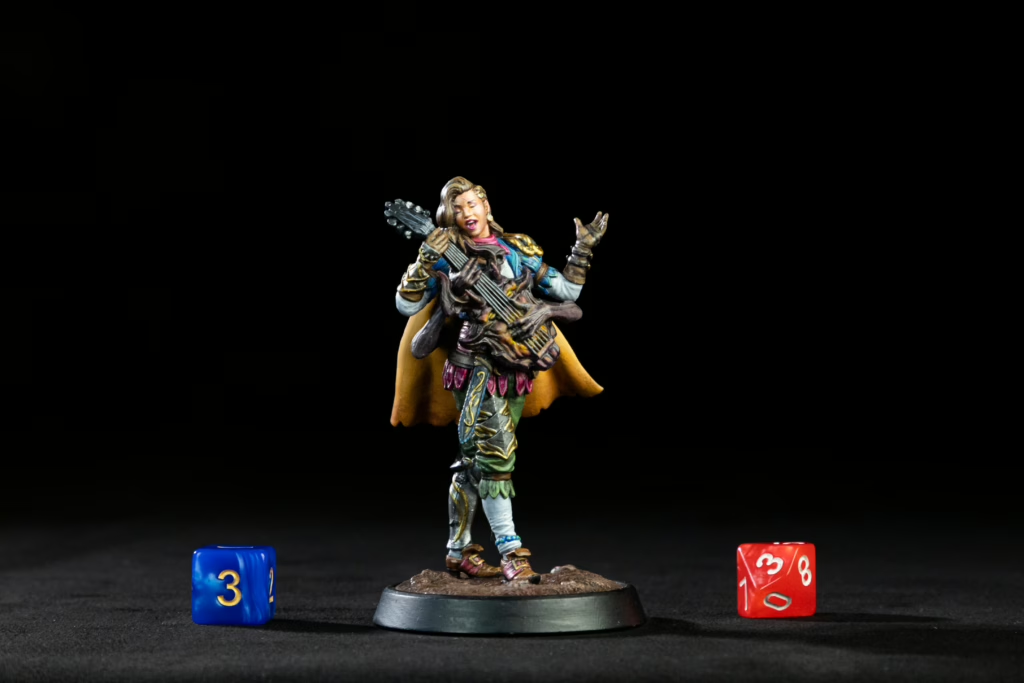
Elves: Grace, Magic, and Long Life
D&D 5e & 2024:
Elves are the classic dexterous spellcasters or archers. With the new D&D 2024 version, there are a lot of Elven Lineages (subraces). But let’s stick with the three most known:
- High Elf: Gains a wizard cantrip and extra language.
- Wood Elf: Has a higher base speed and the ability to hide in natural environments.
- Drow (Dark Elf): Has superior Darkvision and innate spellcasting (though often faces a stigma).
Pathfinder 2e:
In Pathfinder, they are pretty much the same as in D&D. However, we have some different Elf Heritages (subraces) with unique feats and abilities:
- Ancient Elf: Gains a multiclass dedication feat from another class (minimum age ~100 years).
- Arctic Elf: Gains cold resistance and treats environmental cold as one step less extreme.
- Cavern Elf: Gains darkvision.
- Seer Elf: Can cast detect magic at will and gets a bonus to Identify Magic and Decipher Writing.
- Whisper Elf: Bonuses to Seek actions and reduced flat check DCs against concealed/hidden creatures (within 30 ft., if hearing applies).
Combat Strengths & Weaknesses:
- Strengths: High mobility, resistance to charm effects, and innate spellcasting provide tactical advantages in and out of combat.
- Weaknesses: They are often physically fragile compared to sturdier races.
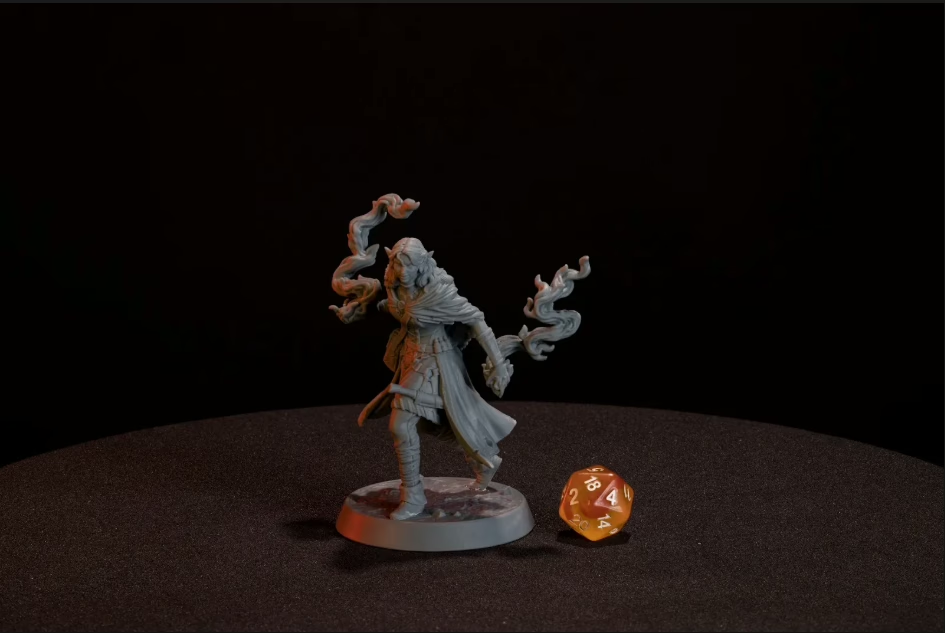
Dwarves: The Unyielding Defenders
D&D 5e & 2024:
Short, stocky, and incredibly resilient, Dwarves are the ultimate tanks. Their D&D species traits include the following:
- Dwarven Resilience: Resistance to poison damage and advantage on saves against poison.
- Dwarven Toughness: Extra hit points per level.
- Stonecunning: A Tremorsense ability in the 2024 rules, letting them detect hidden enemies. Pretty cool, right?
Pathfinder 2e:
Dwarves are also a classic choice in Pathfinder, offering bonuses to Constitution and Wisdom, making them superb clerics and fighters. Some classic heritages are:
- Anvil Dwarf (legacy): Trained in Crafting (or another skill) and gains Specialty Crafting with two specialties instead of one.
- Elemental Heart Dwarf (legacy): Chooses one energy type (acid, cold, electricity, or fire) and can use Energy Emanation once per day to deal 1d6 damage (scaling) to adjacent creatures.
- Strong-Blooded Dwarf: Gains poison resistance and reduces poison affliction stages more quickly on successful/critical saves.
Combat Strengths & Weaknesses:
- Strengths: Exceptional survivability. They are one of the hardiest of the races in D&D, capable of absorbing massive damage.
- Weaknesses: Often slower than other species, making them less effective at chasing down fleeing enemies or reaching the top shelf.
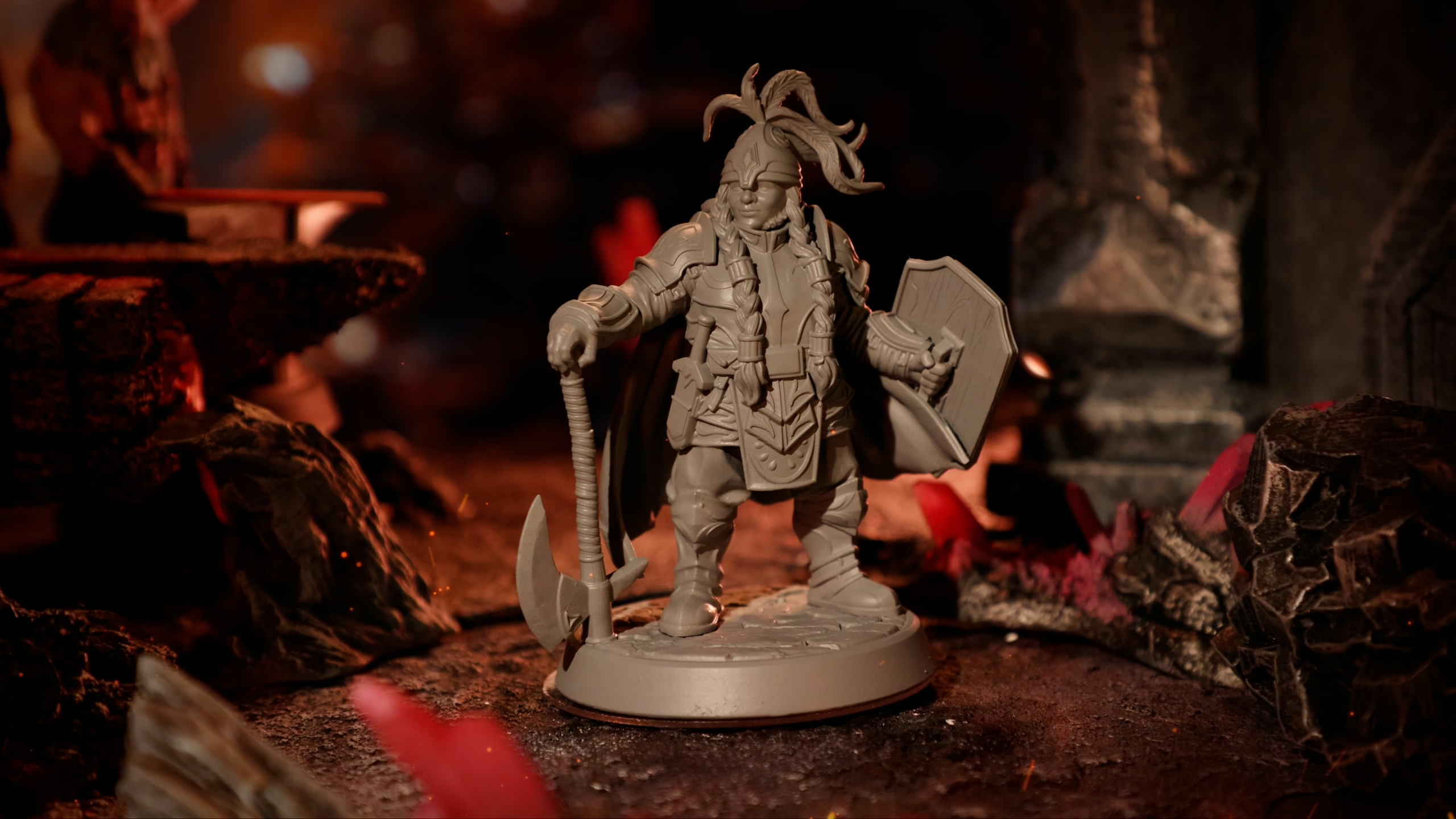
Halflings: The Lucky and Nimble
D&D 5e & 2024:
Halflings might be small, but they are incredibly lucky. Their “Lucky” trait allows them to reroll natural 1s on attack rolls, ability checks, and saving throws. Combined with Nimbleness (moving through the space of larger creatures), they are the perfect rogues and awe-inspiring bards.
Pathfinder 2e:
Halflings are one of the core Ancestries, offering bonuses to Dexterity and Wisdom, with feats that enhance their luck and agility.
Combat Strengths & Weaknesses:
- Strengths: The Lucky trait is one of the most powerful defensive and offensive abilities in the game. They excel in avoiding danger.
- Weaknesses: Physically weak and limited to small weapons.
Dragonborn: Children of Dragons
D&D 5e & 2024:
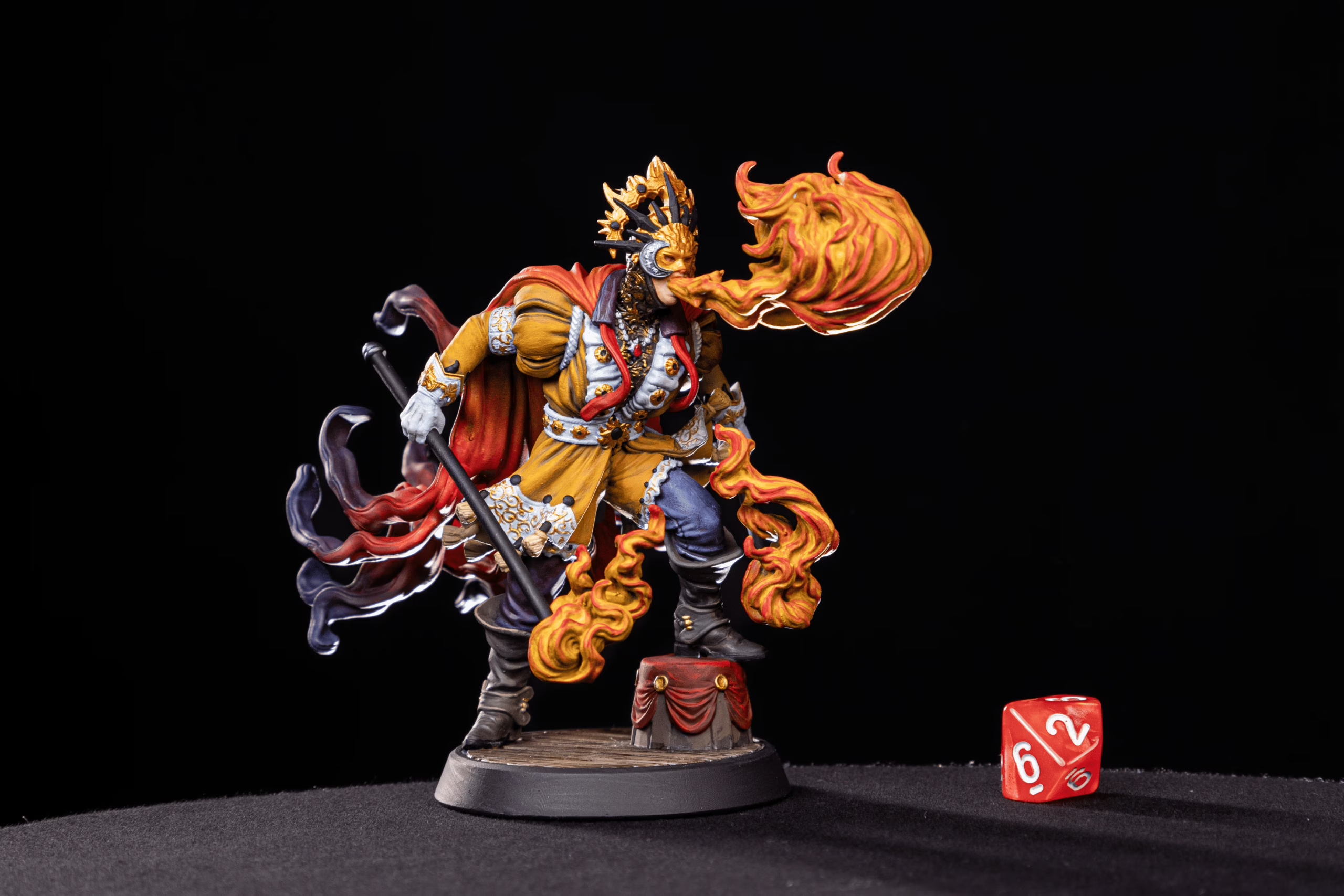
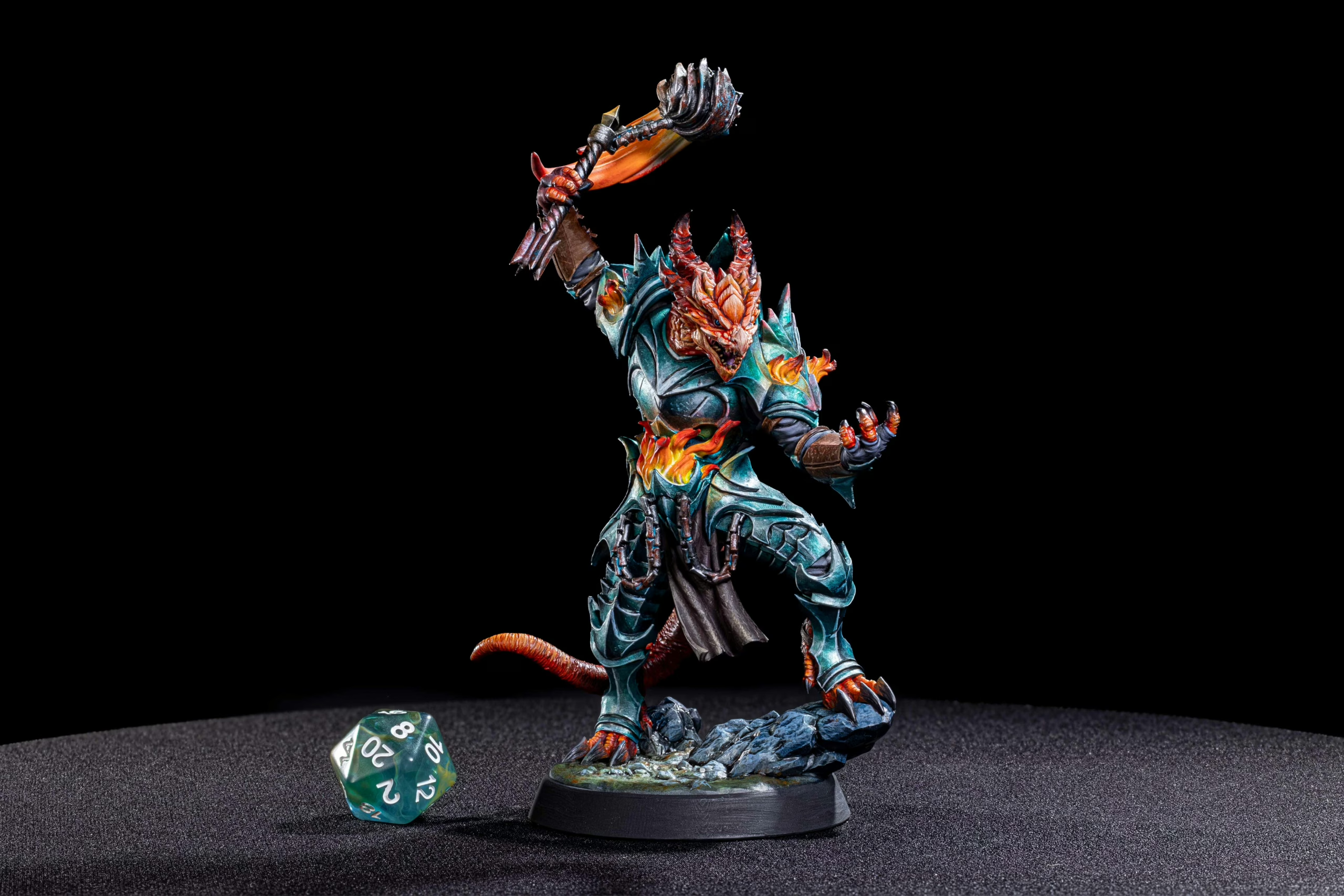
Their main features are a Breath Weapon and elemental resistance based on their draconic lineage. The D&D 2024 update significantly buffed them by adding Draconic Flight, allowing them to temporarily fly and making them top contenders in any D&D species with wings list.
Pathfinder 2e:
While not identical, Pathfinder features Dragonblood, or more commonly, the Dragonkin ancestry, allowing players to play draconic characters with powerful breath weapons and elemental resistances.
Combat Strengths & Weaknesses:
- Strengths: Excellent for dealing area damage and adding elemental variety to martial classes.
- Weaknesses: Their breath weapon scales slowly and can feel underpowered at higher levels.
Tieflings: Fiendish Heritage
D&D 5e & 2024:
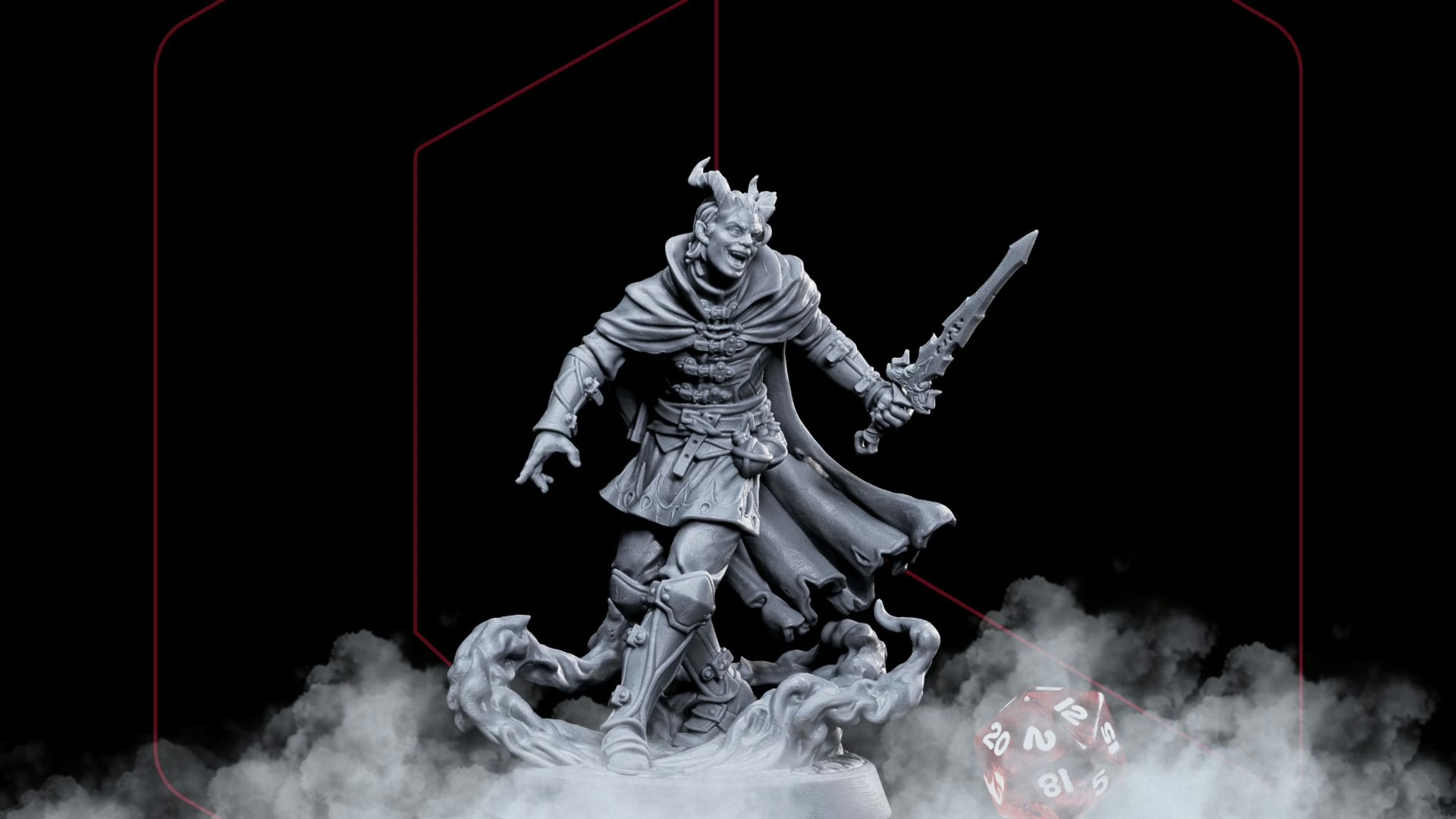
One of my personal favorites, Tieflings bring a darker, charismatic edge to the party. They come from a demonic heritage and possess fire resistance and innate spellcasting (Thaumaturgy, Hellish Rebuke, and Darkness). The D&D 2024 rules expanded their subraces to include Abyssal and Chthonic lineages, providing different spell lists, such as Hold Person or False Life.
Pathfinder 2e:
Here, we’ll call them Nephilim, which is a Versatile Heritage that can be applied to any core ancestry, replacing Tieflings and Aasimars. They are influenced by divine magic. So if you want to be a dwarf-nephilim, go for it! It’d be totally badass.
Combat Strengths & Weaknesses:
- Strengths: Great for roleplaying and sorcerers/warlocks. Fire resistance is highly valuable.
- Weaknesses: Often physically frail, so one must choose their feats and abilities well.
Gnomes: The Illusionists and Tinkerers
D&D 5e & 2024:
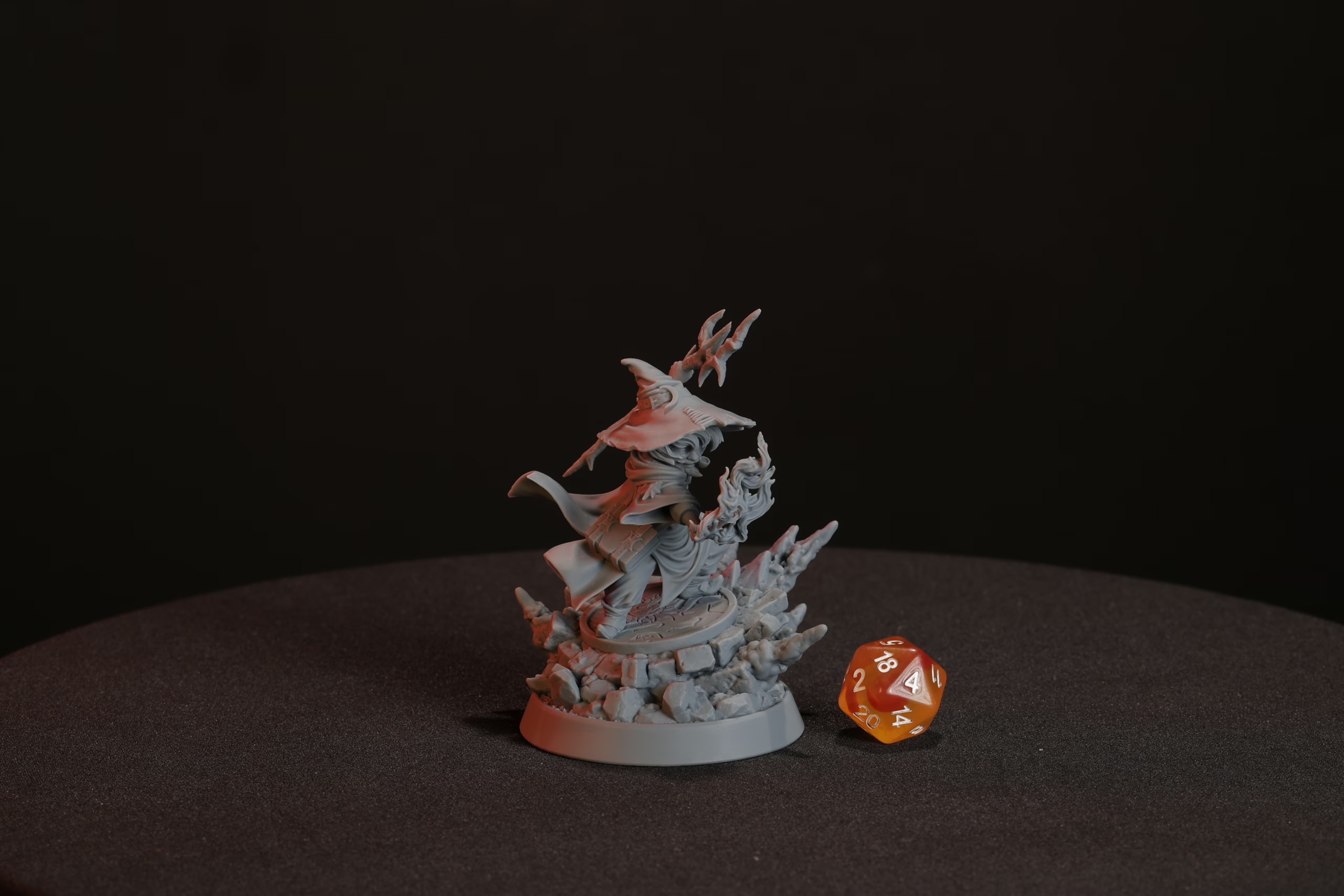
Gnomes are the brilliant minds of the D&D species list. They offer an advantage on mental saving throws against magic (Gnome Cunning). Forest Gnomes can speak with small beasts, while Rock Gnomes can create small mechanical devices. The D&D 2024 rules give them advantage on Intelligence, Wisdom, and Charisma saving throws, making them excellent wizards or artificers .
Pathfinder 2e:
Gnomes are known for their connection to the First World, granting them supernatural abilities and a curious nature.
Combat Strengths & Weaknesses:
- Strengths: Strong mental defenses.
- Weaknesses: Similar to halflings, they are physically small and fragile.
D&D 2024 vs. 5e: What’s New?
Rules have changed how we look at species in D&D. The main shift is the removal of fixed Ability Score Increases and moving them to Backgrounds. This means you can play any species with any class without feeling underpowered. Here are some key updates:
- Dragonborn: Now gain a limited flying speed, making them top-tier for D&D species with wings.
- Dwarves: Lost their armor proficiency (which moved to classes) but gained Tremorsense.
- Elves: The subrace choices are now “Lineages” that provide specific spells like Misty Step or Pass Without Trace.
- Goliaths and Orcs: Have been added to the core rules, offering powerful strength-based options. Goliaths have multiple giant-related abilities, while Orcs have high mobility and resilience.
The Best Race for New Players
If you want to start playing RPG in a safe zone, Human is the universal recommendation. They have no penalties, and their bonus feat (in D&D) allows you to experiment with different playstyles. In Pathfinder, humans are similarly the most forgiving choice, providing a bonus general feat and skill training. So there’s no mistake here, and it’ll be easier to manage their sheet.
The Strongest D&D Race in Combat?
If we look at raw survivability and damage potential, the Dwarf is incredibly difficult to kill. However, for sheer versatility and control, many consider the Elf (with access to spells like Misty Step and Pass Without Trace) to be the most versatile D&D race. If you are asking about the best D&D race overall for raw power, the Dragonborn in D&D 2024, with its breath weapon and flight, is a top contender.
- Best for Spellcasters: Gnome (Magic Resistance), Tiefling (Charisma/Spells), Human (Feat).
- Best for Martial: Orc (Relentless Endurance, Adrenaline Rush), Dwarf (Toughness), Half-Orc (Savage Attacks).
Beyond the Stats
Don’t choose your race or ancestry based on stats! Think about the story you want to tell with them; what is your character story? After all, what is an RPG if not a great novel you create with your friends? There are no boring or unimaginative choices!
Ready to Bring Your Character to Life?
Now that you have the lore and tactics down, it’s time to find the perfect miniature for your hero (or villain). At Loot Studios, we bring your adventures to life with high-quality, detailed 3D-printable miniatures. Whether you need a majestic Elf, a grizzled Dwarf, or a terrifying monster for your party to fight, we have the perfect STL files for you.
Unleash your campaign’s full potential! Explore our collection of premium STL miniatures and terrain to make your next session truly epic. Discover our Freebies!
Want to be a Dungeon Master? Our Game Master Guide will revolutionize your tabletop. Your players will never forget it!
Before I go, may I rain on our parade a little?
As we grow as a community, it’s essential to address how fantasy races are portrayed. There was a concealed racism with certain races like Orcs and Goliaths, and as a player, you couldn’t choose them. As if this justified the fact that these races were inherently bad.
As these races have become options for players, the debate begins as to whether all members of a certain race are bad, since some players did not want to have to interpret just that. This is a problematic trope that has been rightfully criticized. And the new D&D editions removed the concept of “evil races.” This is also why Pathfinder doesn’t treat “species” as “races” but as “ancestries.”
However—bear with me—that doesn’t mean that some characters can’t be bigots. Some might believe in racist stereotypes, yes. But you, as a Player or DM, must make it clear that these are prejudices held by individuals (or NPCs), not universal truths in the lore of the game.
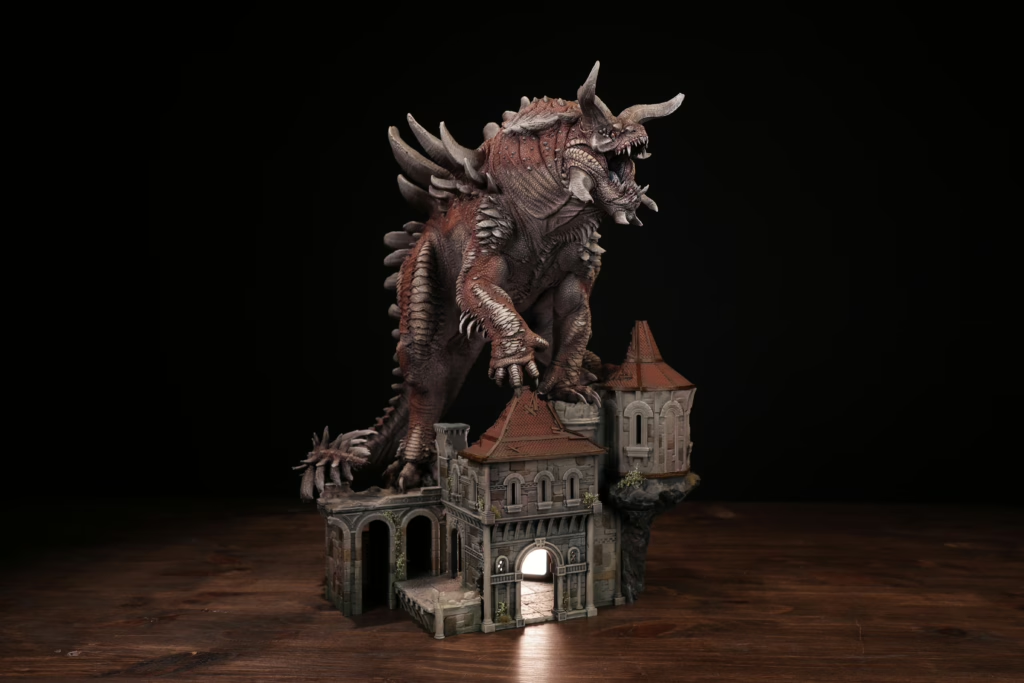
Under No Circumstance Should There Be Bigot Players
DM, remember the power of the Session Zero. Here is where you build characters with your players, set boundaries, and create narrative safety tools. If bigotry, violence, and prejudice exist in the lore of the game, so be it. But make it happen behind the veil; give powers to players to veto the scene, fade to black, etc. It’s not worth making someone upset or uncomfortable for the “sake of the story.” That’s not the point of the game.
Conclusion: There is no wrong choice.
Choosing your race is about finding the synergy between who you want to be and what story you want to tell. Do you want to be a flying powerhouse like the Dragonborn? A lucky survivor like the Halfling? Or perhaps just a human that is awaiting the next adventure?
Whatever you choose, the world of tabletop RPGs is ready for you. The path is yours.
Loot Studios can help you tell your story through highly detailed minis, statues, terrains, busts, and props. Sign up for Loot and choose your favorite bundles from our library of more than 130 options. You can also learn more about our printing and painting process by checking our YouTube Channel.

Luiza Romagnoli is an autistic Brazilian woman, journalist, and obsessed with RPG. She has been writing since she can remember, but it was in 2017, posting texts on Instagram, that she began to take it seriously. She has a poetry book published by Patuá Publishing House: sirva o chá. Nowadays, Luiza is a multi-hyphenned professional: she’s a writer, translator, English and Spanish Teacher, and has an RPG stationery store: Papelaria do Aurel. Although having all these jobs almost leave no room for her D&D sessions, she still loves them.