How a 3D Printer Can Help You Play Memorable RPG Campaigns
3 Ways Printing Solves Your Biggest TTRPG Problems
Every Dungeon Master knows the feeling.
You’ve spent weeks planning the perfect boss fight. You’ve written the dialogue and found the music. In your head, this isn’t just an “Orc Captain”, it’s Kral the Unbroken, a seven-foot-tall behemoth with a missing tusk, a notched axe, and a permanent sneer.
Then, the game night arrives. You reach into your box of minis, pull out a generic orc, and say, “Just pretend this one is bigger and looks scarier.”
It’s… fine. But the magic is broken!
This is the gap a 3D printer fills. It’s not just a new hobby, it’s the ultimate tool for tabletop RPGs. It closes the gap between the epic world in your head and the one (that tiny and weak orc) on your table.
Whether you run Dungeons & Dragons, Pathfinder, Shadowdark, Dragonbane, or any other TTRPG, the challenge is always the same: bringing your imagination to life. Miniatures, terrain, props, and visual storytelling tools help players immerse themselves in your world, but buying exactly what you need can be difficult, expensive, or downright impossible.
Yes, buying a 3D printer is an investment, but its benefits go far beyond the cost. Here’s how it really enhances your game (once you get it, there’s no going back!).
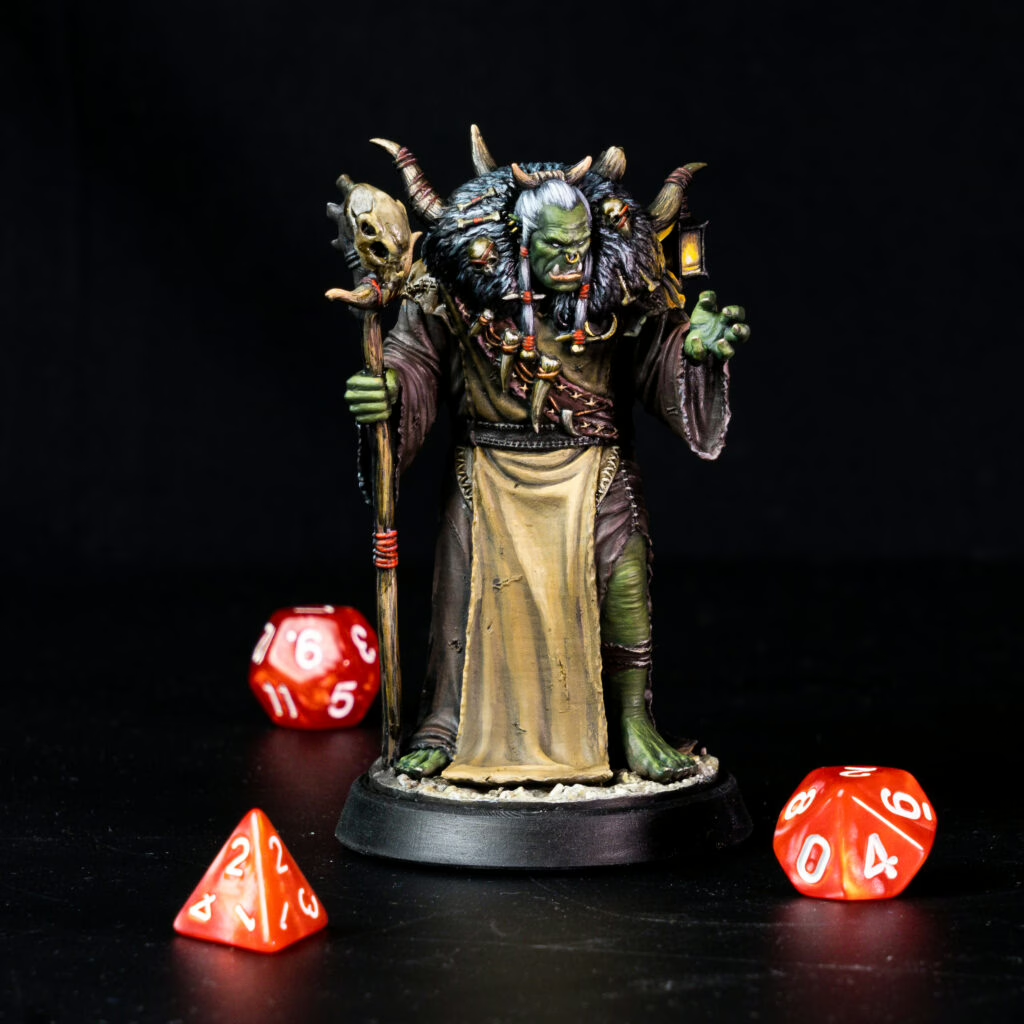
#1: You Stop Searching and Start Printing
This is the biggest game-changer.
The problem with traditional, store-bought miniatures is that you are limited to what’s on the shelf (don’t let me start on the price, I can feel my pocket getting empty already). You’re forced to settle for “close enough.”
Picture this. You need a mini for your new character—a human cleric wearing specific plate armor and holding a hammer. You spend hours at your local game store or online, finding only clerics with robes or maces. Finally, you buy one that’s “close enough” and try to forget the details are wrong.
With a 3D printer, things work differently.
Instead of hoping a manufacturer has produced the exact miniature you need, you start with a digital collection of STL files and print what fits your vision. If you run a long-term D&D campaign, chances are you’ll eventually need an unusual NPC, a unique monster, or a player character that doesn’t match anything available in stores.
Those moments happen constantly in tabletop RPGs.
A 3D printer gives you the freedom to create what your campaign needs instead of compromising with what’s available.
Players connect more deeply with miniatures that genuinely represent their characters. Likewise, Dungeon Masters can finally put the exact villain, ally, or monster they imagined onto the table instead of asking everyone to use their imagination to fill in the gaps.
And if you’ve ever heard a player say, “Wait… THAT’S the thing we’re fighting?” after placing a custom miniature on the battle map, you already know how powerful that moment can be.
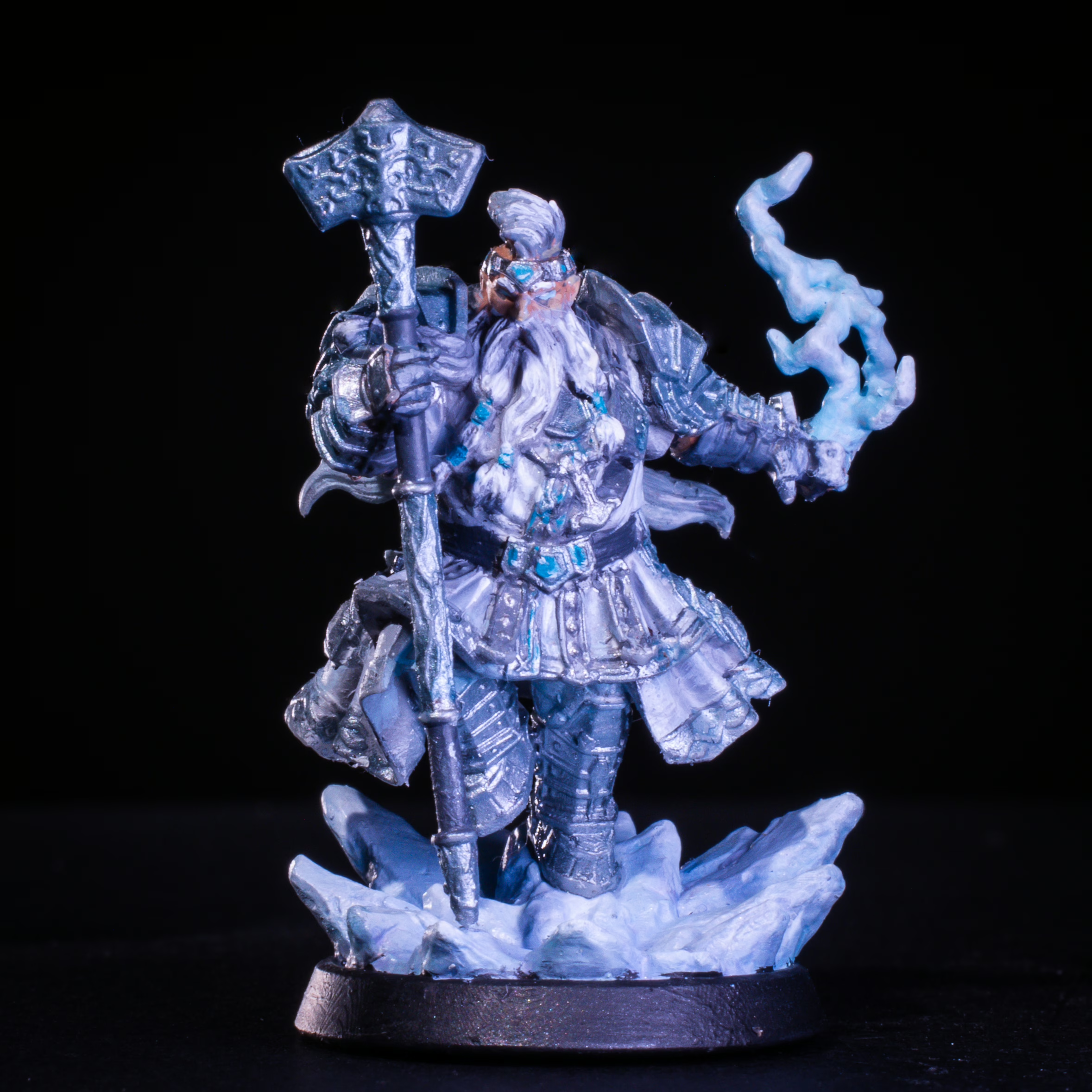
#2: You Build Worlds, Not Just Encounters (Immersive Props & Terrain)
Once most people start 3D printing for D&D, they quickly realize the printer isn’t just for miniatures.
It’s for everything.
This is where you separate a good campaign from a memorable one. A 3D printer allows you to create physical, tangible objects that your players can interact with.
Physical Props
Think beyond the minis. Print the “cursed amulet” your rogue just looted. Hand your players a set of 3D-printed “Elven coins” from the treasure chest. Give them the “ancient rune-covered key” they need to open the dungeon door.
When a player physically holds the item their character discovered, something changes. The game feels less like a conversation and more like an experience.
Many DMs use props for puzzle encounters, magical artifacts, quest items, and handouts. Instead of describing an object for five minutes, you simply place it on the table.
Instant immersion.
Scatter Terrain
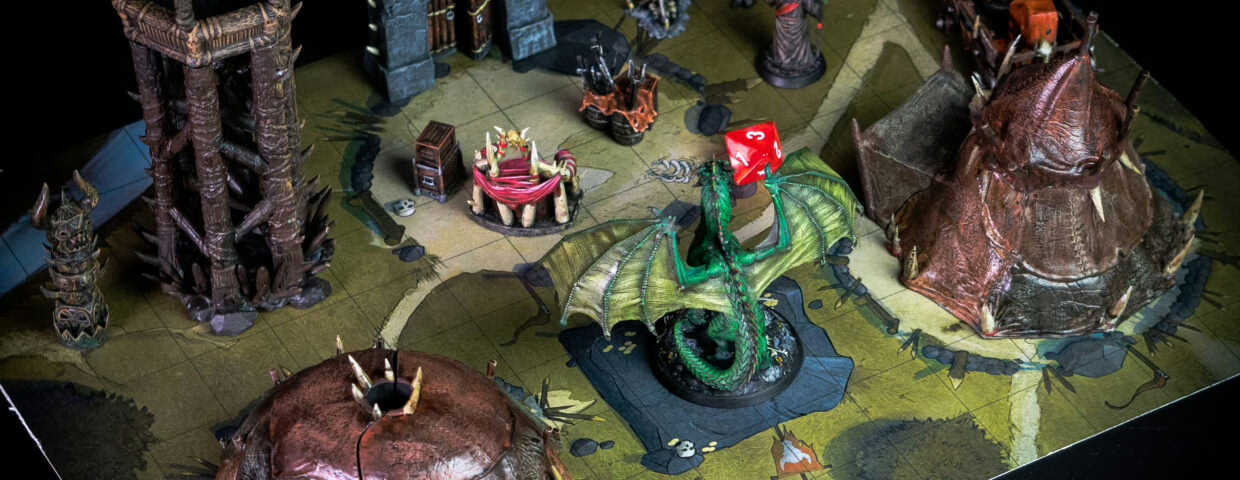
Why use a 2D map when you can have a 3D tavern? You can print barrels, tables, bookcases, treasure chests, market stalls, campfires, gravestones, and dozens of other pieces that make environments feel alive.
Now your fight isn’t just happening on a flat grid. Players can flip tables for cover. Leap from balconies. Hide behind crates. Kick enemies into wells. The terrain becomes part of the encounter design.
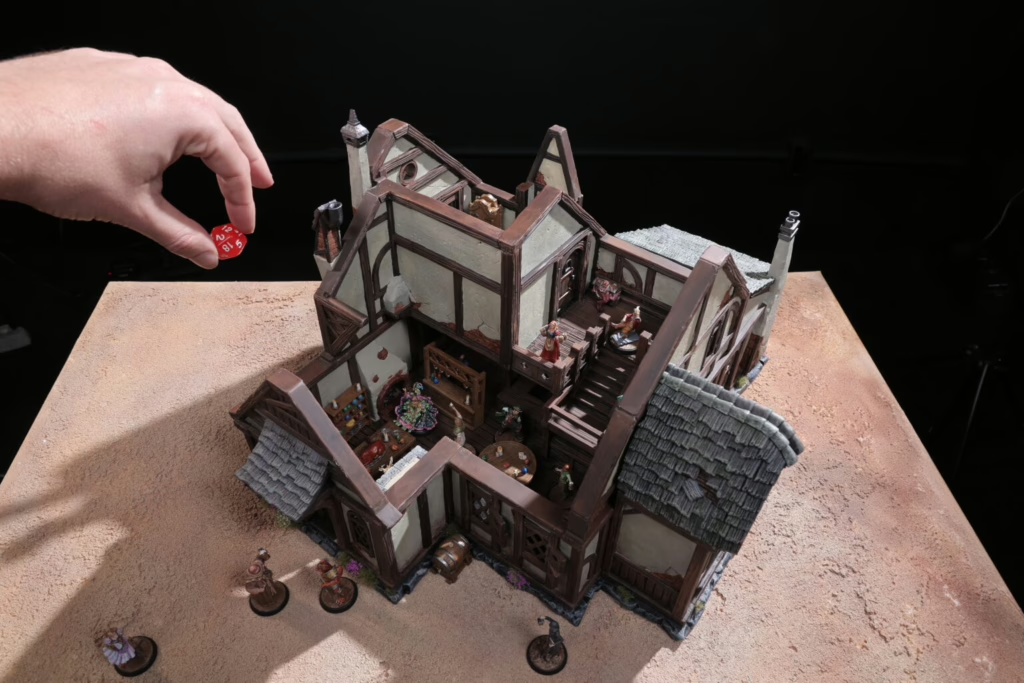
Dungeon Systems
For the truly dedicated DM, you can print entire modular dungeon systems.
Walls, doors, traps, pillars, bridges, staircases, altars—you can build the dungeon room by room as your players explore it.
Few things create tension like physically revealing the next chamber after the party opens a door. It’s one of those moments that players remember years later.
Campaign Preparation Gets Easier
Ironically, many DMs find that physical terrain makes preparation easier.
When you can see the dungeon laid out in front of you, encounter planning becomes more intuitive. You naturally start thinking about line of sight, chokepoints, verticality, and environmental hazards.
The result is often better combat design and more memorable encounters.
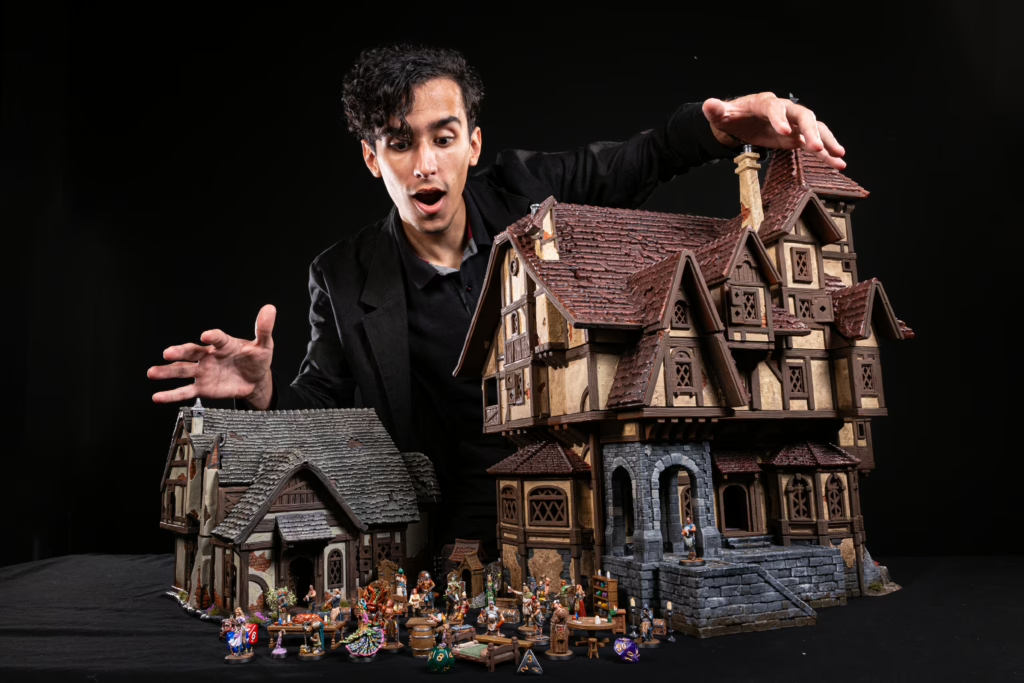
#3: You Can Finally Build That Army
Let’s discuss another significant issue: scale.
You have a great idea for a campaign.
- A goblin horde.
- A skeleton army.
- A city overrun by rat-men.
- A necromancer raising hundreds of undead.
Then you start pricing miniatures, and suddenly that epic battle becomes six skeletons and a dream.
This is where a 3D printer truly shines.
Once you have a high-quality STL file for a skeleton, the cost to print it is just a fraction of buying traditional miniatures. You can print 10, 20, or 100 of them.
The same applies to goblins, zombies, guards, cultists, demons, townsfolk, and nearly every common enemy type you’ll ever need.
A 3D printer allows you to build armies and hordes that are financially difficult to justify with traditional miniatures. It gives you the scale that tabletop RPGs have always promised.
To help you understand a little bit better all the possibilities, take a look at this video from our YouTube channel:
#4: Your Campaign Becomes Truly Unique
One benefit that often gets overlooked is creative freedom.
Many campaigns eventually begin to look similar because everyone uses the same miniatures, the same maps, and the same accessories. I know I might be repeating myself, but well, a 3D printer REALLY changes that.
You can create custom environments, themed encounters, faction-specific armies, unique bosses, personalized props, and campaign-specific scenery that nobody else has.
Maybe your desert campaign features giant beetle mounts.Your underwater adventure might use coral-covered ruins. Maybe your players travel aboard a massive flying ship that appears on the table every session.
The more your physical game pieces reflect your campaign setting, the more distinct and memorable your world becomes.
For many Dungeon Masters, this becomes one of the most rewarding parts of the hobby.
Reality Check: 3D Printing Isn’t Completely Plug-and-Play
Let’s be honest for a moment.
A 3D printer is not a magical machine that instantly creates perfect miniatures, and like everything in life, there is a learning curve.
You’ll need to learn basic printer setup, support placement, resin or filament settings, post-processing, and troubleshooting. Some prints will fail. Some miniatures will come out imperfect. Every hobbyist has a story about a model that printed without a head or a dragon wing that somehow ended up attached to the wrong place.
The good news?
Most modern printers are dramatically easier to use than they were a few years ago. The learning process is usually measured in days or weeks, not months.
And once you become comfortable with your setup, printing miniatures, terrain, and props becomes a routine part of campaign preparation.
If you want to know more about 3D printing, we have a full (and totally free) 3D printing course that’ll take you from zero to a 3D printing hero!
Final Thoughts: A Hobby That Feeds Your Hobby
A 3D printer looks more complicated than it is. But having one at home unlocks endless creative possibilities. It’s a new, relaxing hobby in itself that directly improves your main hobby.
You can print your own designs, mix techniques, and experiment with materials like transparent resin for ghostly effects or water effects.
Here at Loot, we believe in this so much that we’ve built our entire world around it. We provide the hyper-detailed, professionally supported Fantasy and Sci-Fi bundles every month. But we also provide the knowledge. We have in-depth, step-by-step guides to help you learn, from the best FDM and resin printers for beginners to painting tips on our YouTube Channel.
It’s time to make your RPG campaigns truly memorable.
Loot Studios can help you tell your story through highly detailed minis, statues, terrains, busts, and props. Sign up for Loot and choose your favorite bundles from our library of more than 130 options. You can also learn more about our printing and painting process by checking our YouTube Channel.
FAQ – Common Questions
Is a 3D printer worth it for D&D and Pathfinder?
For players who only need a few miniatures per year, maybe not.
For active Dungeon Masters, miniature painters, terrain builders, or anyone running long-term campaigns, many hobbyists find that the value adds up quickly through customization, terrain creation, props, and miniature production.
Should I use resin or FDM printing?
Resin printers are generally preferred for highly detailed RPG miniatures because they capture fine details exceptionally well. FDM printers are often excellent for larger terrain pieces, dungeon walls, buildings, and scenery. Many dedicated hobbyists eventually use both. Nowadays some FDM printers can print higher quality miniatures. It’s not as good as resin (yet), but if you’re not too picky, that’ll be enough for you.
Do I need to know 3D modeling?
Not at all. Most people start by printing existing STL files and never touch 3D modeling software.
The growing library of available miniature and terrain files is more than enough for most campaigns. You can also subscribe to Loot Studios and gain access to a library with thousands of models ready to print, paint and play!
How long does it take to print a miniature?
It depends on the model and printer, but most resin miniatures can be printed within a few hours, while larger terrain projects may take longer. Many Dungeon Masters simply start a print overnight and wake up to a completed batch of miniatures. That’s also what we do here at Loot Studios!