Protecting Your Pets From Toxic 3D Printing Resin
Finding the Best Way to 3D Print and Still Keep Your Little Ones Safe
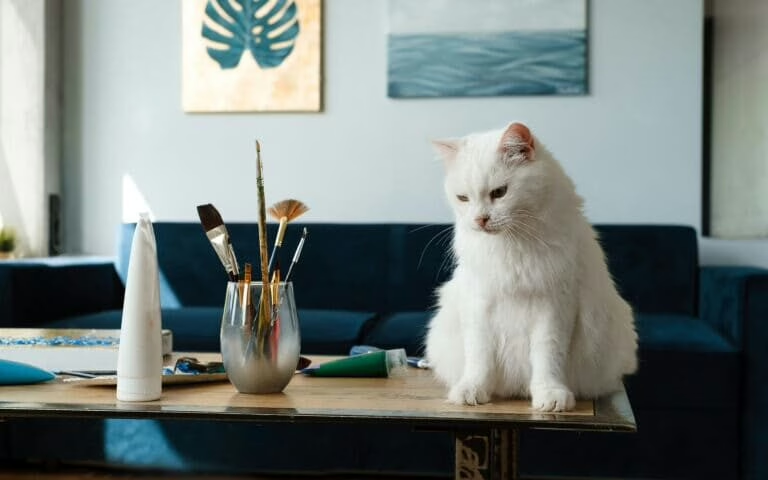
You’re here to ensure the safety of your pets, whether it’s your kitty, puppy, chinchilla, parrot, you name it. But if you don’t own a 3D printer yet, you can read this other post first. Think about…uhhh…Max. Or Luna. You know, the $4,000 pure-bred whose lineage can be traced back through the Industrial Revolution, to the grudge of some countries (if a whiff of processed meat is found in their meal, they refuse to eat). Or Queen Zorya Utrennyaya, First of its Name, Seer of Foreign Entities Inside the Walls, the cat you found in a dumpster one day, going back home (you may have caught her eating what you took for vomit, once).
Regardless, it’s not a new thing that 3D printer resins are hazardous and require special care whenever handling and disposing, be it the raw material or uncured, unprocessed 3D prints. A lot of reading of safety procedures should be done before purchasing and setting up your printer. But, alas, pets don’t usually care about that. Unfortunately, resins don’t care that pets don’t care about their potential risk. So you, dear reader, have to do the job of two to ensure their safety. It’s not as hard as it seems, though it does require a bit of consistent discipline to make sure the risks don’t stack up over time. Hopefully, this article will guide you on this task.
WANNA KNOW MORE ABOUT SAFETY PROCEDURES WITH RESIN 3D PRINTING? CLICK HERE!
Keep Them Out of Harm’s Reach
The gist of keeping your pets safe is the same as keeping yourself safe. Don’t touch uncured resin, especially with mucous parts (eyes, mouth, nose, etc.). Avoid inhaling resin fumes. While the fumes are usually more of an irritant than a lethal threat in small hobby setups, you still want to keep your pet’s sensitive lungs away from them. Make sure your pet stays away from those, too. For dogs, it could be as simple as keeping all your 3D equipment on a countertop. For cats or birds, who scorn at our vertical limitations, you can keep the aforementioned things in a separate room, cabinet, or closet, as long as these get some proper ventilation.
Proper ventilation means air renovation throughout the day (like in a garage or shed) or active ventilation. Be careful with those small carbon filters that sit inside the printer; they are great for reducing that “stinky plastic” odor, but they don’t actually eliminate the chemical vapors. For true safety, exhausting the air outside is the gold standard, as air purifiers aren’t really a substitute for fresh air. Active ventilation would require an in-line fan, an aluminum duct and… Say, 20 minutes of cursing to cram everything in its place. The same applies to your alcohol (IPA) container and gloves (NOT LATEX ONES), respirators, and goggles. Isopropyl alcohol is highly toxic if ingested, so never leave open containers unattended—always use lidded ones to prevent a curious cat from taking a “forbidden sip.” Store everything in a box or drawer.
Take a look at this video from Evansville Raptor Con and see more about it!
After it’s done, you can store and organize your models, because, after all, your collection also needs to be kept safe from your pet, if you know what I mean.
Streamline Your Post-processing
As a way to keep the contact with this toxic resin as minimal as possible, it’s smart to keep all of your 3D printing equipment as close by. With that, you can make sure almost no time for some accident or undesired contact happens. If you have a bucket of alcohol in one cabinet and the printer across the room, you risk dripping resin (or contaminated alcohol) onto the floor, rugs, clothes or skin. That’s a no-no. Pets are low to the ground; if you drip even a tiny bead of resin on the floor and don’t wipe it immediately, your dog or cat might walk right through it and lick their paws later. That’s a direct ticket to ingestion, which we want to avoid at all costs.
First the process: washing, then curing. The finished pieces must pass through these steps, in order, and with diligence. Let’s borrow from industrial standards to optimize the processing of resin 3D prints. Your printer setup must be close to the post-processing station. Leave no obstacles between them, to avoid tripping. It helps to cover the work surface in a plastic sheet that could be easily set under the sun and discarded if you get any spills. When you do discard waste, remember that resin-soaked gloves and paper towels are “spicy” trash. Cure them under UV light or the sun before tossing them, and keep your trash in a sealed container so your dog doesn’t decide to chew on a toxic towel.
When that part is done, they must be taken out of the printing bed (getting an extra rubber or silicone mat also helps here) to their cleaning bath (to do some light scrubbing with a brush) and then to their curing space. After that you just have to clean your printer bed, put away gloves, pliers, tongs, respirator, etc. and you’re done!

Your Work Station
As for the actual, physical configuration of that area, much can be learned from other people. This video from I Like to Make Stuff shows how a station like the one mentioned (with extra storage) is built with scrap pieces of wood in an afternoon. Skip to 9:20 and you’ll see how the whole piece functions well. And plus, without the need for him to even move when dealing with 3D prints.
One extra tip for pet parents: check the area under your printer frequently. If your FEP vat develops a tiny puncture, resin can leak out slowly and hide under the machine. You might not notice it, but a curious pet sniffing around the “new machine” definitely will. A mere proximity guarantees minimal chances of accidents. Google “resin 3D printer setup” to get more ideas. They usually range from simple desks to coordinated machines in a dedicated room.
Find Less Harmful, Yet Imperfect Materials – If You Can Afford It
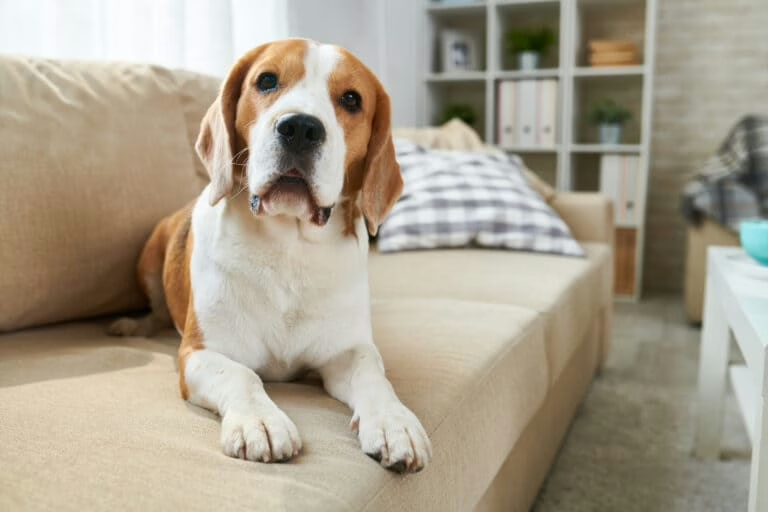
Honestly, it rarely will be worth it. There is no truly 100% safe uncured 3D printed resin. You might hear people suggest dental resin as a “safer” alternative, but that’s a bit of a misunderstanding. Uncured dental resin is still toxic to handle and just as bad for your pets as the regular stuff. The term “biocompatible” only applies after the part has been perfectly cured under very specific, controlled conditions. It doesn’t reduce the risk of workspace contamination. For the price, you’re better off spending that money on better ventilation and containment. The real safety comes from your discipline and setup, not the type of resin in the vat.
It’s Not That Bad. Really.
I still haven’t met a person who claims that 3D printing is for everyone. It’s not as simple as using a microwave, yet if you’re disciplined, it’s perfectly manageable. Keep in mind that resin sensitization is cumulative—your body (and your pet’s) keeps a tally of every time you’re sloppy with safety. Being consistent is the key.
Although not as perilous as driving a car, 3D printing with resin is something to be taken heed of. In practice, it demands some extra setting up and, say, 10 minutes of active work in post-processing per printing cycle. Gloves, mask, and apron on, remove print from bed and dump it into alcohol solution. While it soaks a bit, wash and scrub your bed and resin container. Focus on your recent print, some light scrubbing here, then into the UV chamber. Close the lids on everything when you’re done, and you’ve successfully kept the “toxic zones” closed off from the rest of the house.
Final Thoughts
Well, considering this regards your safety or the safety of your loved little ones, it’s not too much in exchange for some great miniatures. Over time, these precautions become a natural part of dealing with the 3D printer. And it’ll feel odd not to do them. A thankless job, you might think. But seeing your senior pet bustling with vitality is enough of a gratification for discipline applied over hundreds of prints. I am fortunate to have this here. Though it’s not a matter of age, one of my kitties is 12, almost overweight and as bitter as she can get. She’s still my kitty. Always will be. I make sure to let her know that on a daily basis, which may or may not contribute to her bitterness.
Last, but not least, you can read this other post about some cool props you could be printing right now.
Loot Studios can help you paint highly detailed minis, statues, and props. Choose your favorite bundle from our previous releases or sign up for Fantasy or Sci-Fi to receive a new bundle every month. You can also check out some tips on our YouTube Channel.